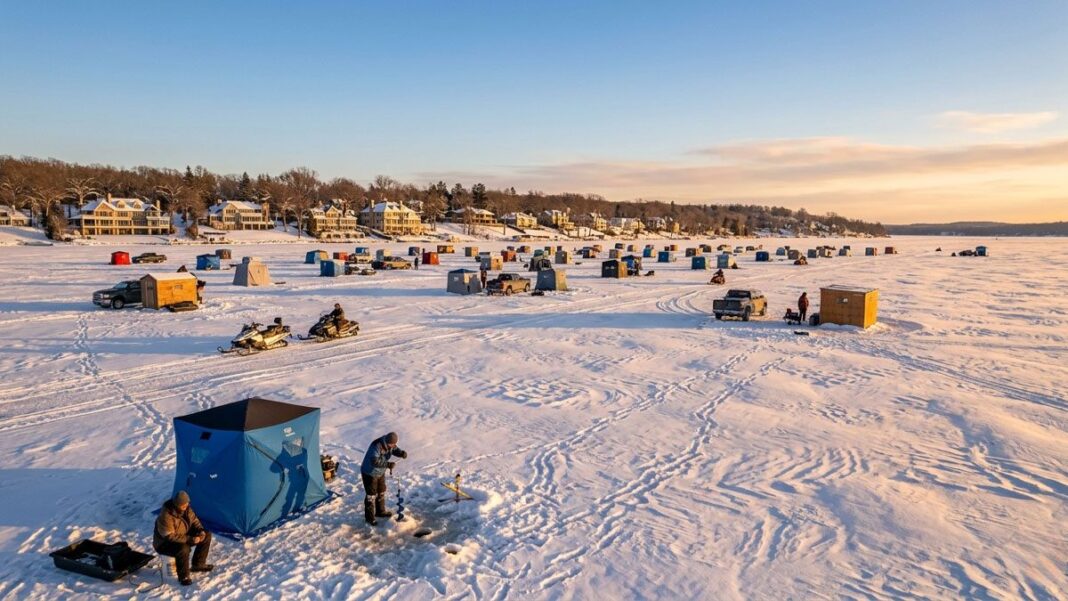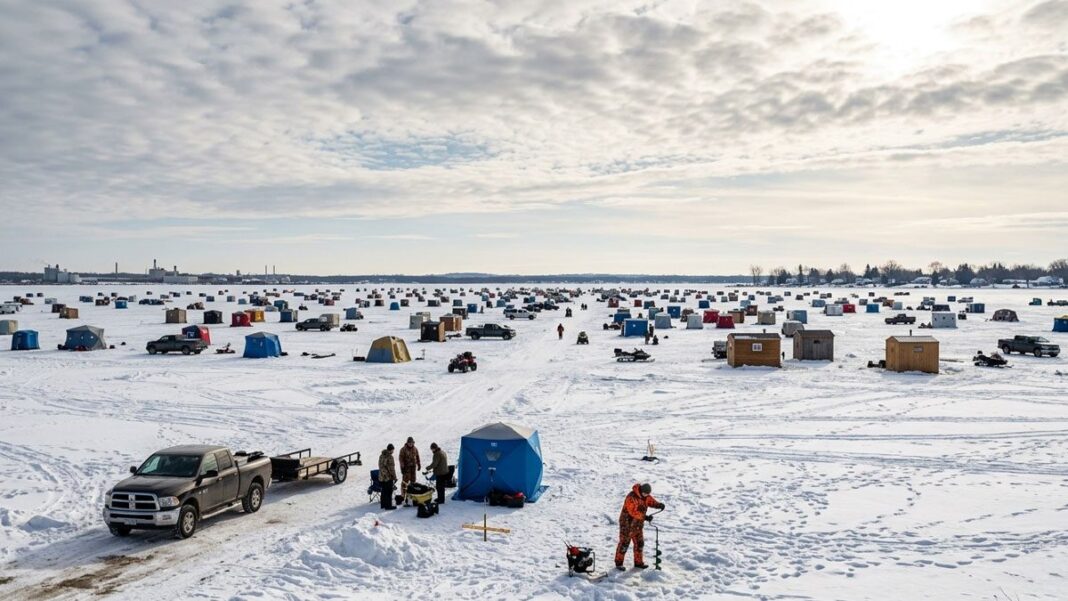
If Lake Geneva is the “Big Leagues,” then Lake Winnebago is the absolute “Wild West” of Wisconsin ice fishing. It’s a massive, shallow bowl of water, and when the bite is on, there isn’t a better place on earth to fill a bucket. But man, this lake demands some serious respect. You can’t just walk out a hundred yards and hope for the best; you gotta understand how this beast works.
I’ve spent plenty of cold mornings out here, and let me tell ya, Winnebago will either make your season or break your spirit. Here’s how to make sure it’s the former.
1. The “Mud” vs. The Reefs
Winnebago is weird because it’s so shallow (mostly under 20 feet).
-
The Mud Flats: This is where the magic happens for Walleye and Perch. You’re basically looking for “humps” in the mud.
-
The Reefs: Places like Horseshoe Reef or Abraham’s Rocks are classic. If you can find where the rock meets the mud, you’re in the money.
-
Editor Tip: If you see a “city” of shanties, there is usually a reason. But don’t be afraid to move a few hundred yards away from the crowd to find the fish that haven’t been spooked by all the noise.
2. Target Species: The “Big Three”
-
Walleye: This is the crown jewel. Winnebago walleyes love a jigging rap or a simple minnow on a deadstick. The sunset bite is usually electric.
-
Perch: Some years they are monsters, some years they are dinks. But they are almost always hungry.
-
White Bass: If you hit a school of these, hold on. Its non-stop action. They’re great for kids because they hit hard and fight like crazy.
3. The “Crack” Problem
This is the part I gotta be serious about. Winnebago is famous for its “expansion cracks.” The ice shifts, it heaves, and it can open up or stack up (shove ice) in a heartbeat.
-
Safety First: Never, ever cross a crack without checking it first. Most of the local fishing clubs put out “bridges” (literally just big wooden planks) so you can get your ATV or truck across safely.
-
Pro Tip: Follow the marked “roads” from the local taverns or clubs. They scout the ice every morning. Don’t try to be a hero and find your own path across a fresh crack.
4. Clear Water? Not Here.
Unlike Geneva, Winnebago is usually pretty stained (murky).
-
Go Bright: This isn’t the place for subtle colors. Think “Glow,” “Chartreuse,” or “Firetiger.” You want the fish to actually see your lure in that tea-colored water.
-
Vibration: Lures that make a little noise or vibrate a lot help the fish find you when visibility is low.
5. The Culture
There’s nothing like the “Bago” culture. Between the sturgeon spearing in February and the miles of ice roads, it’s a whole different world out there. You’ll see guys with setups that look like they belong in a downtown condo, and other guys sitting on a bucket with a stick. Both of ‘em are havin’ the time of their lives.
Why It’s Worth the Trip to Ice Fish
Winnebago is a “numbers” lake. When you find the fish, you aren’t just catching one or two—you’re catching twenty. It’s big, it’s windy, and it’s a little intimidating, but that first big Walleye coming through the hole makes it all worth it.
Just keep an eye on the weather. When the wind kicks up on the “Big Pond,” it gets real Western, real fast.
Next Step: Should we do a “Top 5 Ice Fishing Bars” on the shores of Winnebago? Every fisherman needs a place to warm up after the sun goes down.