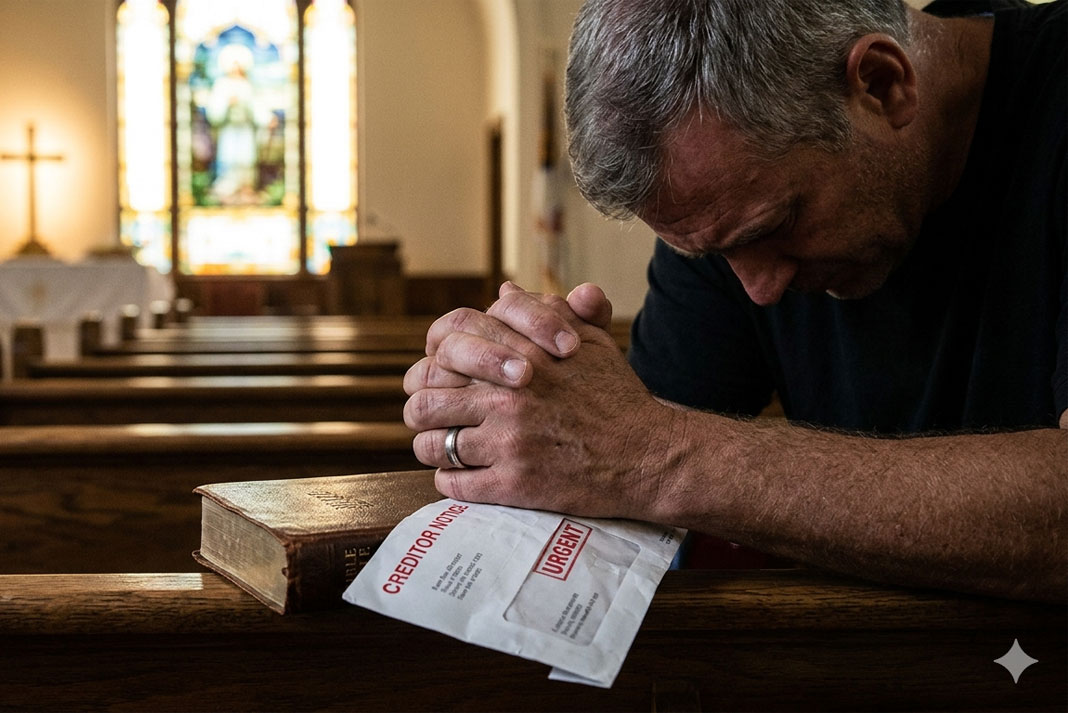
Why Financial Crisis Affects So Many Christians Today
Imagine this: one moment, you’re comfortable with a stable income, and the next, you’re staring at an empty bank account, the weight of bills looming over you like a dark cloud. You’re not alone in this struggle. According to a recent survey, nearly 40% of Americans cite financial stress as their primary concern, and for many Christians, this anxiety can feel especially burdensome.
The challenges that arise from financial crises can leave you feeling hopeless, anxious, and even isolated. Many believers wrestle with questions of faith, wondering why a loving God would allow such hardship. It’s easy to feel that you’ve fallen short or that your prayers are falling on deaf ears. God understands this struggle.
In this blog post, you will find biblical hope and practical solutions to navigate financial turmoil. By turning to Scripture and seeking godly wisdom, you can cultivate peace, even amid financial chaos. For more insight, check out our articles on trusting God during uncertainty and how faith impacts financial decisions.
What the Bible Really Says About Financial Crisis
The Word of God offers powerful truths that provide guidance during financial difficulties. Let’s consider a few key scriptures:
-
- Matthew 6:25-26 says, “Therefore I tell you, do not be anxious about your life, what you will eat or what you will drink, nor about your body, what you will put on. Is not life more than food, and the body more than clothing? Look at the birds of the air: they neither sow nor reap nor gather into barns, and yet your heavenly Father feeds them. Are you not of more value than they?”
-
- Philippians 4:19 reassures us, “And my God will supply every need of yours according to his riches in glory in Christ Jesus.”
-
- Proverbs 22:7 warns that “the borrower is the slave of the lender.” This insight into the dangers of debt serves as a reminder that financial management is not merely practical but deeply spiritual.
One biblical character who faced a financial crisis was Job. Despite losing nearly everything—his wealth, health, and family—Job remained steadfast in his faith. He asked hard questions and expressed his anguish, but ultimately he chose to worship God, saying, “The Lord gave, and the Lord has taken away; blessed be the name of the Lord” (Job 1:21).
This serves as a powerful reminder that God’s perspective on our trials is often different from our own. Financial challenges can refine your faith and draw you closer to Christ. Today, in a rapidly changing economic landscape, the historical context of financial uncertainty echoes our experiences. We are reminded of God’s faithfulness throughout Scripture: He cares for His people. For a deeper dive into biblical characters facing adversity, check out how faith leads to resilience.
The Root Causes: Why Financial Crisis Persists in Our Lives
Understanding the root causes behind financial crises is vital for effective change. Here are a few common spiritual and practical causes:
-
- Lack of Stewardship: Many Christians fall into poor financial practices such as impulsive spending or neglecting to budget. This can lead to spiraling debt and stress.
-
- Cultural Pressure: Society often equates self-worth with material wealth. This worldview can prompt people to chase after riches while neglecting what God desires for them.
-
- Fear and Anxiety: Fear can paralyze decision-making, preventing proactive steps toward financial health. This holds true, particularly in times of economic uncertainty.
The misconception that wealth equals God’s blessing can keep people trapped in a cycle of comparison and discontent. It can lead to a mindset where value is measured by net worth rather than faith. Instead, Scripture calls believers to live by faith, not by sight (2 Corinthians 5:7).
To shift your perspective, embrace these biblical truths about stewardship and contentment. For more insights on spiritual growth and stewardship, read about being a faithful steward of God’s gifts.
4 Biblical Principles That Transform How You Handle Financial Crisis
Principle 1: Trust in God’s Provision
Scripture foundation: Matthew 7:11 reminds us, “If you then, who are evil, know how to give good gifts to your children, how much more will your Father who is in heaven give good things to those who ask him?”
Practical application steps:
-
- Begin each day with prayer, asking God for wisdom in financial decisions.
-
- Create a budget that reflects your trust in God’s provision. Allocate funds for necessities while giving thanks for what you have.
-
- List areas where you’ve seen God’s provision. Share these with someone to cultivate faith.
Real-life example: Consider Rachel, a single mother who faced the threat of eviction. Despite her dire situation, she chose to trust God by praying daily and budgeting closely. Just two weeks later, she received unexpected financial assistance from her church, proving God’s provision when she needed it most.
For additional guidance, check out how prayer can transform your situation.
Principle 2: Seek Wise Counsel
Scripture foundation: Proverbs 15:22 states, “Without counsel plans fail, but with many advisers they succeed.”
Practical application steps:
-
- Identify trustworthy individuals who can offer wise financial advice—this could be a pastor, financial advisor, or family member.
-
- Attend financial workshops offered by your church or community to gain further insights.
-
- Actively seek feedback on your budgeting skills and decision-making.
Real-life example: John was struggling with excessive credit card debt. After seeking counsel from a financial advisor at his church, he created a manageable plan to tackle his debt systematically, experiencing newfound freedom.
For practical steps, read more about the importance of community in financial struggles.
Principle 3: Embrace Contentment
Scripture foundation: Philippians 4:11-12 says, “Not that I am speaking of being in need, for I have learned in whatever situation I am to be content.”
Practical application steps:
-
- Practice gratitude daily. List five things you are thankful for, especially focusing on non-material blessings.
-
- Limit exposure to media that promotes consumerism; replace it with faith-based content.
-
- Volunteer your time and talents as a way of investing in others rather than accumulating earthly goods.
Real-life example: Emily learned to be content after embracing a frugal lifestyle and finding joy in simple pleasures. This shift led her to volunteer at a local shelter, bringing her fulfillment and deeper gratitude.
For more on building a grateful heart, explore practices that foster gratitude.
Principle 4: Invest in Eternal Treasures
Scripture foundation: Matthew 6:19-21 teaches, “Do not lay up for yourselves treasures on earth… but lay up for yourselves treasures in heaven.”
Practical application steps:
-
- Regularly contribute to your church and missions as an investment in God’s kingdom.
-
- Reevaluate your financial priorities regularly to ensure they align with your values.
-
- Engage in discussions about how finances can serve others, emphasizing giving rather than accumulating.
Real-life example: David shifted his focus from building wealth to supporting his local church’s initiatives. His decision to contribute generously transformed not just his finances but also his joy and purpose.
For insights on investing your time and resources effectively, read generosity as a lifestyle.
Your 7-Day Action Plan for Biblical Victory Over Financial Crisis
To help you take tangible steps, here’s a week-long plan:
Day 1:
-
- Action: Write down your financial worries.
-
- Scripture: Read Matthew 6:25-26.
-
- Prayer Focus: Ask for peace and clarity about your anxieties.
Day 2:
-
- Action: Draft a budget reflecting your priorities.
-
- Scripture: Reflect on Proverbs 21:20.
-
- Prayer Focus: Seek wisdom in your spending habits.
Day 3:
-
- Action: Identify a mentor to discuss your finances.
-
- Scripture: Proverbs 15:22.
-
- Prayer Focus: Ask God for guidance in selecting a mentor.
Day 4:
-
- Action: Volunteer your time or resources.
-
- Scripture: Luke 6:38.
-
- Prayer Focus: Pray for a heart of generosity.
Day 5:
-
- Action: Plan a week without unnecessary spending.
-
- Scripture: Philippians 4:11-12.
-
- Prayer Focus: Seek contentment in your current situation.
Day 6:
-
- Action: Evaluate your progress and adjust your budget as necessary.
-
- Scripture: Proverbs 16:3.
-
- Prayer Focus: Trust God to direct your plans.
Day 7:
-
- Action: Celebrate the week’s accomplishments with friends or family.
-
- Scripture: 1 Thessalonians 5:16-18.
-
- Prayer Focus: Thank God for His provision and faithfulness.
For more resources on living a life of faith, visit our section on Christian living.
When the Biblical Approach Seems Too Hard: Overcoming Common Obstacles
You may find that implementing biblical principles in the face of financial crisis feels overwhelming. You might be wrestling with objections like:
-
- What if I can’t make ends meet?
Remember Philippians 4:19: “And my God will supply every need of yours according to his riches in glory in Christ Jesus.”
- What if I can’t make ends meet?
-
- What if I can’t find a way out?
Even in seemingly impossible situations, God is faithful. Recall Job’s perseverance; God restored him beyond measure.
- What if I can’t find a way out?
-
- What if my past mistakes define my future?
No one is beyond redemption; God uses flawed people to exhibit His grace. Your past does not define you or limit God’s work in your life.
- What if my past mistakes define my future?
In moments of doubt, turn to Scripture for encouragement. God is your provider, and He has a plan for your life. Consider exploring renewing your faith when you feel lost.
Moving Forward: Your Next Steps Toward Freedom
As you reflect on the insights shared in this blog, remember that the journey towards financial freedom may be gradual, but it is achievable. Embrace the truth that God values your faith more than your finances.
This week, challenge yourself to take one specific action towards financial health. Whether it’s updating your budget, seeking counsel, or committing to a life of gratitude, every step counts.
Lean on God’s promises, and know you’re not alone in this journey. For more encouragement, check out drawing closer to God during trials.
In your financial journey, remember: freedom is not just found in wealth, but in your relationship with Christ.