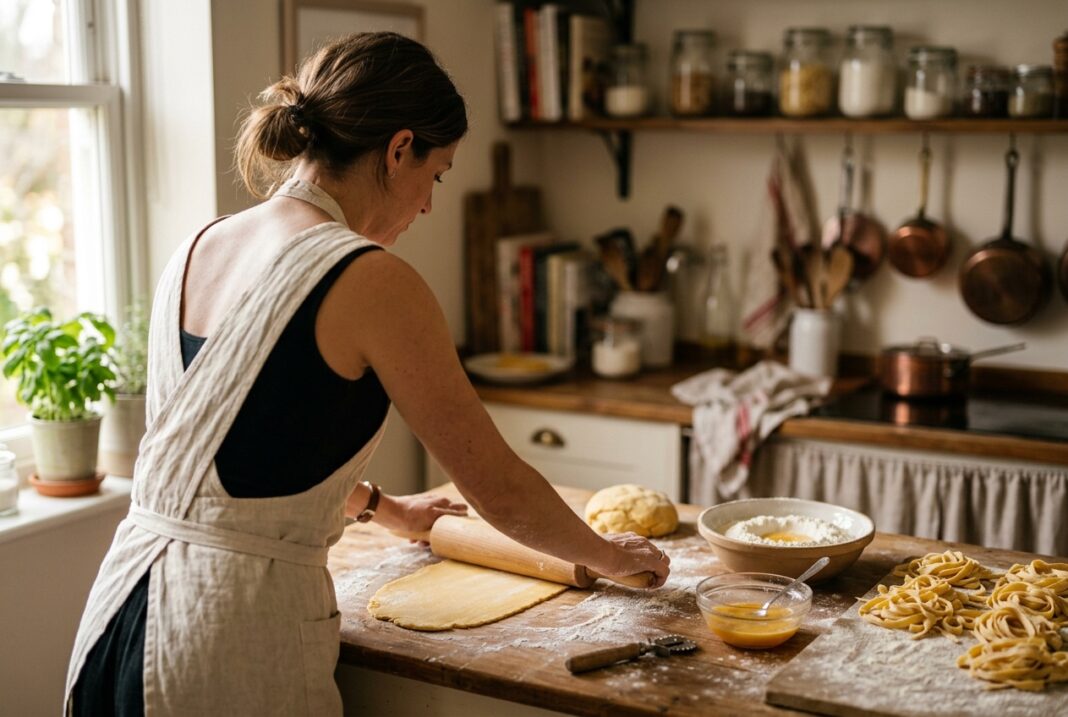
How to Make Fresh Pasta at Home Without a Machine in 2026
Making fresh pasta at home requires just flour, eggs, and a rolling pin – no expensive machine needed. This traditional method creates silky, tender noodles perfect for spring meals using simple ingredients you likely already have in your kitchen. The process takes about 45 minutes from start to finish and yields pasta with superior texture and flavor compared to dried varieties.
What ingredients do you need for homemade fresh pasta?
Fresh pasta requires only three essential ingredients: all-purpose flour, large eggs, and a pinch of salt. The traditional ratio is 100 grams of flour per egg, which typically yields one serving of pasta.
For four servings, use 400 grams (about 3 cups) of all-purpose flour, 4 large eggs, and 1 teaspoon of salt. Some recipes include a tablespoon of olive oil for extra richness, though authentic Italian pasta uses just flour and eggs. Room temperature eggs incorporate more easily into the dough.
How do you make pasta dough by hand?
Create a flour well on a clean work surface, crack eggs into the center, and gradually incorporate flour using a fork until a shaggy dough forms. Then knead the dough by hand for 8-10 minutes until smooth and elastic.
Start by mounding flour on your counter and creating a deep well in the center. Beat the eggs lightly with a fork, then slowly drag flour from the inner walls of the well into the eggs. According to the Smithsonian Magazine, this traditional well method prevents the eggs from spreading across your counter and ensures even incorporation.
What’s the best technique for rolling pasta without a machine?
Roll the dough from the center outward in all directions, rotating it frequently and dusting with flour to prevent sticking. Aim for paper-thin consistency where you can almost see through the dough.
- Divide rested dough into 4 portions and work with one piece at a time
- Start with firm pressure and lighten your touch as the dough becomes thinner
- Rotate the dough 90 degrees every few rolls to maintain an even shape
- Dust both the surface and rolling pin frequently with flour to prevent tearing
How long should you rest pasta dough before rolling?
Pasta dough must rest for at least 30 minutes at room temperature, wrapped in plastic wrap or covered with a damp towel. This resting period allows the gluten to relax, making the dough easier to roll thin.
The resting phase is crucial for achieving the proper texture. During this time, the flour fully hydrates and the gluten networks relax, preventing the dough from snapping back when rolled. Food science research shows that well-rested dough rolls more evenly and produces better texture in the final pasta.
Key Takeaways
- Fresh pasta requires only flour, eggs, and salt – no special equipment needed beyond a rolling pin
- Proper kneading for 8-10 minutes develops the gluten structure essential for good texture
- Resting the dough for 30 minutes makes rolling significantly easier and more effective
- Rolling technique matters – work from center outward and rotate frequently for even thickness
Making fresh pasta at home connects you to centuries of culinary tradition while creating a meal that’s infinitely more satisfying than store-bought varieties. With practice, this meditative process becomes second nature, giving you the foundation for countless delicious spring meals. Your kitchen will smell amazing, and your family will be impressed by pasta that truly melts in your mouth.